
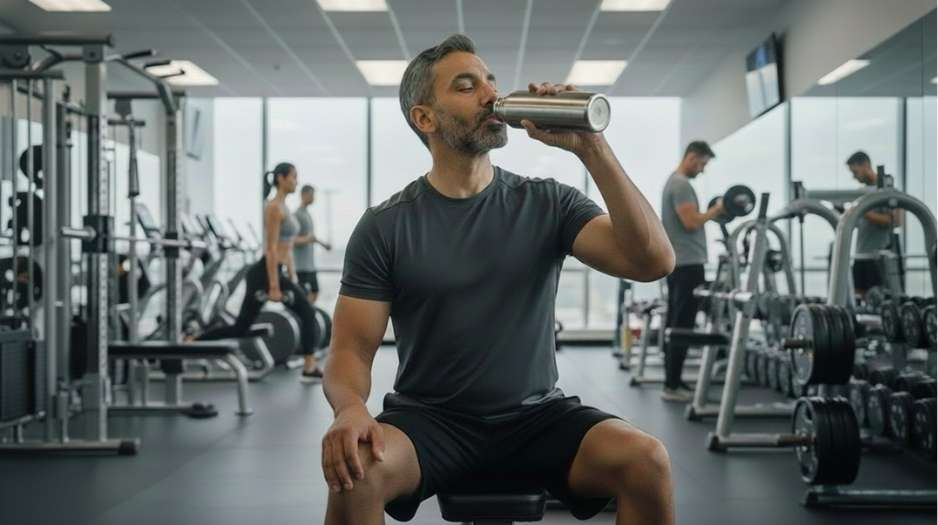
You wake up, and your knees give a familiar, audible “crunch” as you stand. Your lower back feels like a rusty gate hinge that hasn’t been oiled in a decade. Most men in their 40s and 50s accept this as the inevitable “price of admission” for getting older. But what if the issue isn’t your age, but your internal irrigation?
Stiff joints are sometimes just thirsty joints – and hydration is one factor you can actually influence.
While most of us view hydration as something we do to avoid a dry mouth, for the man over 40, hydration for joint health is actually a critical form of mechanical maintenance. Water is the “oil” in your engine. Without it, friction can increase, performance can dip, and your risk of niggles and training setbacks can quietly rise. This guide moves beyond “eight glasses a day” to show you how smart hydration for joint health can actually make your body move more smoothly.
Hydration for Joint Health After 40: Why Your Joints Are Thirsty
To understand why hydration matters for strength, it helps to look at how joints are built. Unlike muscle, articular cartilage is avascular—it doesn’t have a direct blood supply. Instead, cartilage cells rely largely on diffusion from the surrounding joint environment (especially synovial fluid), and regular joint loading/unloading helps move fluid and support nutrient–waste exchange.
The Lubrication System: Synovial Fluid
Synovial joints (freely movable joints, such as elbows, knees and ankles) are lined by a soft tissue called the synovium (synovial membrane), which helps maintain synovial fluid—a slippery liquid that reduces friction so joint surfaces can glide smoothly, acting like high-grade oil in an engine. This fluid reduces friction between cartilage surfaces during movement and contains molecules such as hyaluronic acid and lubricin that support lubrication.
Hydration supports normal whole-body fluid balance, which may influence how your joints feel during heavy training—especially stiffness or “creakiness” when you’re under-recovered, cold, or under-hydrated.

Cartilage is up to 80% Water
Articular cartilage—the smooth, white tissue that covers the ends of your bones—is approximately 60 – 80% water. That water isn’t just sitting there; it’s held in place by specialised molecules within the cartilage and supported by a strong collagen framework.
This high water content—along with cartilage’s collagen and proteoglycan structure—helps it resist compression and spread loads. When you load a joint in a squat or deadlift, cartilage briefly deforms and shifts water within the tissue, which helps reduce peak stress on the joint surfaces. Dehydration won’t “dry out” your cartilage overnight, but being under-hydrated can affect overall fluid balance and may make your joints feel less “smooth” or resilient under heavy training.
Cartilage’s tendency to re-expand after loading is partly driven by osmotic forces created by proteoglycans. Staying well-hydrated supports normal body fluid balance, which is one reason hydration may help your joints feel better during training—alongside smart loading, strength, and recovery.
Performance Beyond the Pump
Hydration isn’t just about joint longevity; it is a direct performance enhancer.
The 2% Rule
Physiological research suggests that around 2% body-mass loss from fluid can start to make training feel harder and, in some conditions, reduce performance—especially during longer sessions, higher sweat rates, or warmer gyms.
When you’re hypohydrated, plasma volume can fall and heart rate tends to rise to maintain output. That “drift” can make your usual working weights feel more taxing. Max strength may not collapse, but repeat-set performance, focus, and technical consistency can slip—especially late in the workout—raising the odds of form breakdown.
For men over 40, who may already be managing slower recovery and busier schedules, that extra perceived effort can be enough to derail consistency. If time is tight and you want a structure that respects both performance and recovery, explore our 30-minute total body workout for men over 40, built around compound lifts and smart exercise pairing.
The Electrolyte Triangle: It’s Not Just Water
If you are training hard, drinking plain water might not be enough. In fact, drinking too much plain water can sometimes flush out the very minerals your body needs to stay balanced. This is where electrolytes come in.
| Mineral | Role in Your Body | Why it Matters After 40 |
| Sodium | Manages fluid balance and nerve signals. | Helps you retain the water you drink so it reaches your joints. |
| Potassium | Supports muscle contractions and prevents cramping. | Essential for heart health and maintaining “the pump.” |
| Magnesium | The “relaxation” mineral; aids recovery and sleep. | Helps prevent the muscle tightness that contributes to joint stiffness. |
A Note on Sodium: Many public-health messages focus on reducing salt for blood-pressure control. That’s important. At the same time, active men can lose meaningful amounts of sodium through sweat. The goal is balance, not complete avoidance – especially if you train hard and sweat heavily.
A Proactive Hydration Protocol for Joint Health
For the Over Lifestyle reader, hydration is a proactive strategy, not a reactive one. After 40, thirst can be a slightly slower signal, and many men walk around mildly under-hydrated without realising it. If you wait until you are thirsty, you’re often already playing catch-up.
1. The Morning Flush
You lose a significant amount of water overnight through respiration, and many men over 40 also wake more often during the night, which can further fragment sleep and hydration routines. Start your day with 500ml of water before your first coffee. Think of this as “waking up” your joints and giving your body a head start before caffeine, work, and life take over.
2. The “Pee Test”
You don’t need a lab to check your hydration. Your urine colour is the most reliable low-tech indicator. Aim for “pale straw” or “lemonade” colour. If it looks like apple juice, you’re likely under-hydrated – and for a man over 40, that can show up as stiffer joints, heavier-feeling workouts, and slower recovery.
3. Pre-Hydrate for the Gym
Hydration for a 5 PM workout doesn’t start at 4:55 PM. It begins earlier in the day. Aim to be well hydrated at least two hours before you lift. As recovery and regulation slow with age, going into a session even slightly behind on fluids can make your warm-up feel heavier and your joints more reluctant to move. Giving your body time to absorb and distribute that fluid means you’re not trying to “fix” hydration halfway through your first working set.
Hydration, Recovery, and the Over-40 Body
As you move through your 40s and 50s, recovery becomes less forgiving. The same hard session that felt fine at 30 can leave you unexpectedly sore or flat for days if sleep, nutrition, and hydration are off. Staying on top of fluid and electrolyte intake doesn’t replace good programming or rest days, but it removes one simple bottleneck that often makes joints feel “older” than they really are.
For a deeper dive into rest day recovery after 40, see our dedicated guide on turning rest days into productive training days.
Conclusion: Hydration for Mechanical Maintenance
As we age, the margin for error in our training gets smaller. We can no longer “wing it” on four hours of sleep, a cup of coffee, and hope for the best.
Hydration for joint health is one of the simplest, cheapest, and most overlooked upgrades you can make. By maintaining your internal fluid levels, you may reduce friction, support muscle elasticity, and better protect the cartilage that keeps you moving under the bar and in everyday life.
For men over 40 who want to keep training hard, playing with their kids, and moving well into their 50s and 60s, this kind of basic “mechanical maintenance” is non-negotiable. Treat your body like the high-performance machine it is. Keep the “oil” topped up, and your joints are more likely to reward you with years of capable, confident strength. If you’re already dealing with aches and niggles, our guide to joint-friendly strength training after 40 shows how to adjust your programming without giving up on heavy lifting entirely.
Over Lifestyle Sign-Off
Smart. Sustainable. Strong for Life.
Over Lifestyle
Disclaimer
This article provides general health and fitness information for educational purposes only. It is not medical advice. Always consult a qualified healthcare provider, especially if you have underlying conditions such as kidney disease or hypertension, before significantly altering your fluid or mineral intake. [Read Our Full Disclaimer]